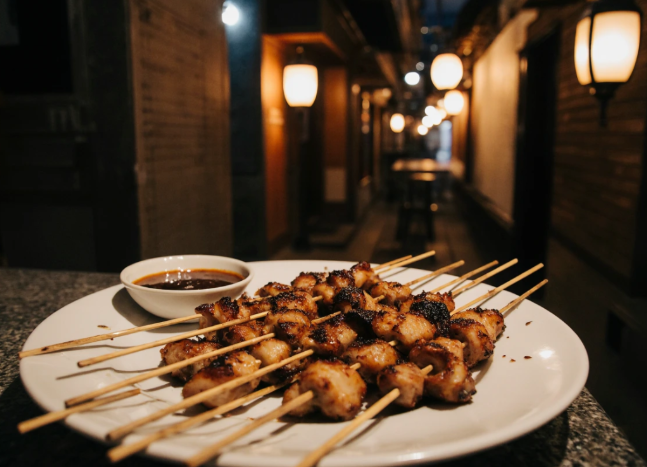

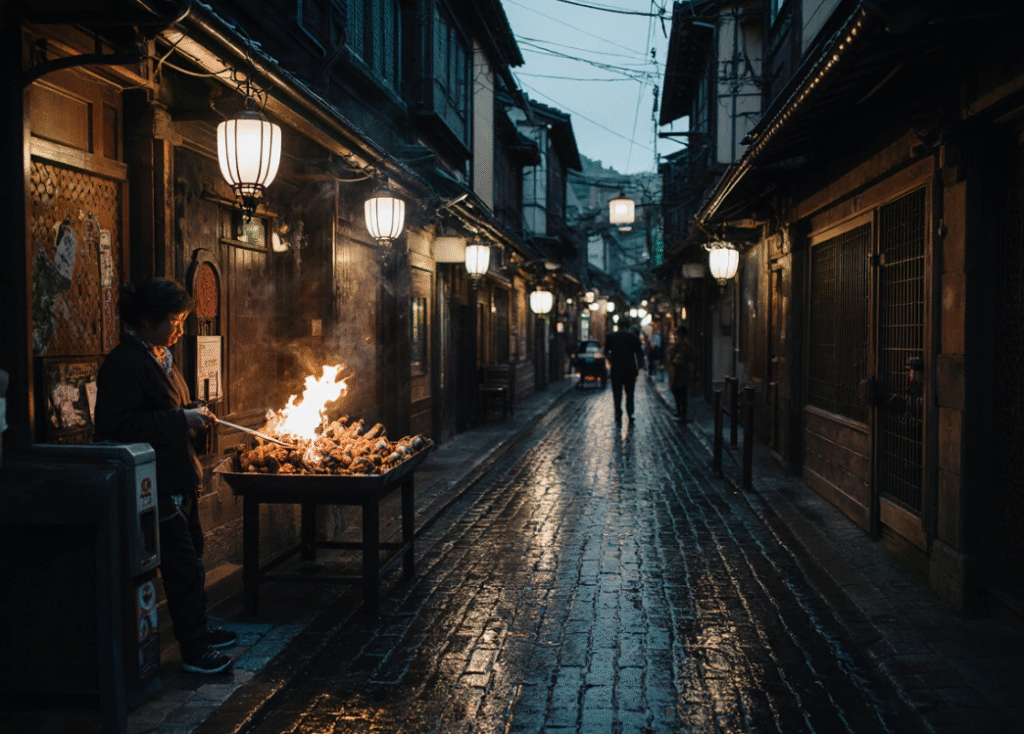
Pontocho is a narrow alley running parallel to the Kamogawa River where you’ll find some of the best yakitori in Kyoto tucked into traditional wooden machiya buildings. This 500-meter lane transforms each evening into a dining destination where grilled chicken skewers, cold beer, and intimate atmospheres combine into something distinctly Kyoto. For travelers seeking authentic yakitori Pontocho experiences, this alley concentrates the city’s finest charcoal-grilled chicken venues in one atmospheric location.
More about Pontocho:
- Pontocho Park Guided Tours
- The Complete Guide to Pontocho: Kyoto’s Most Atmospheric Alley
- Pontocho Restaurants: Complete Dining Guide
Why Kyoto Yakitori Stands Apart
Kyoto’s yakitori developed through kaiseki influence—the multi-course dining tradition that prioritizes seasonal precision and presentation. When Tokyo yakitori evolved as quick street food for workers, Kyoto chefs applied formal cooking principles to grilled chicken. Each skewer follows the same philosophy as a ¥30,000 kaiseki meal: ingredient quality, preparation timing, and flavor sequencing matter equally.
The Tamba region surrounding Kyoto produces jidori chickens specifically for this cooking style. These heritage birds grow for 80-120 days compared to industrial chickens at 50 days. The extended growth period develops firmer muscle texture and concentrated flavor that standard chicken lacks. You taste the difference immediately—jidori has a meatier bite and doesn’t fall apart on the skewer.
Binchotan charcoal burns at 1,000°C without producing smoke or chemical residue. Standard charcoal peaks at 600-700°C and leaves creosote compounds that mask chicken flavor. That 300-degree difference means proteins caramelize cleanly, fat renders without smoking, and the natural taste comes through instead of getting buried under char.
What Makes Pontocho Yakitori Different?
Pontocho Yakitori stands apart because of its setting and preparation style. The establishments here use binchotan charcoal—a dense white charcoal that burns at consistent high temperatures without smoke or odor. This means the chicken gets a crisp exterior while staying tender inside, with none of that acrid taste you get from cheaper fuels.
The chefs work behind small counters, grilling each skewer to order. You watch the process: the chef brushes tare sauce (a sweet-salty glaze made from soy sauce, mirin, and sake) onto the chicken, rotates it over the coals, waits for the exact moment when the sugars caramalize but don’t burn. It takes years to master this timing.
Understanding the types of Yakitori meat is essential for ordering. A proper menu includes:
- Momo (thigh meat) – the most popular cut, with fat that renders as it cooks
- Negima (chicken and leek) – the leek absorbs chicken fat and becomes sweet
- Tsukune (chicken meatballs) – ground chicken mixed with cartilage for texture
- Kawa (chicken skin) – becomes crispy like bacon
- Hatsu (heart) – chewy and iron-rich
- Bonjiri (tail) – the fattiest, most flavorful part
Each venue specializes in different cuts. Some focus on offal. Others perfect the basics.
How to Order Yakitori Pontocho Without Mistakes
The single biggest ordering error tourists make: picking skewers randomly instead of following the traditional flavor progression. Yakitori dining has a sequence. Lighter proteins first, then richer cuts, finishing with tare-glazed options. Ignore this order and you won’t taste the subtle flavors—your palate gets coated with fat.
The proper sequence:
Start with shio (salt-only) preparations. Order sasami or momo with just sea salt and lemon. These clean flavors establish your baseline.
Move to negima or vegetables wrapped in chicken. The leeks absorb rendered fat while adding texture contrast.
Progress to tare-glazed skewers: tsukune, then kawa, then offal if you eat liver or heart.
Finish with bonjiri—the fattiest cut that should close your meal, not open it.
Order omakase (chef’s choice) at yakitori-only specialists. The chef will execute this sequence automatically, starting with lighter flavors and building to richer ones. It costs the same as ordering individually but delivers better pacing. At mixed robata venues where the chef handles multiple cuisines, ordering specifically makes more sense.
For drinks, match the intensity. Start with light lager beer. Move to highball with the tare-glazed skewers. Finish with sake or shochu if you want stronger alcohol. The progression should rise with the food’s richness.
From Postwar Food Stalls to Dining Destination
Pontocho existed for centuries as a geisha district, but yakitori as we know it only became popular after World War II. Food was scarce. Chicken parts that wealthy families discarded—organs, skin, cartilage—became street food for workers.
Small grills appeared throughout Pontocho. Vendors skewered whatever chicken parts they could source and sold them to laborers and taxi drivers. The food was cheap, filling, and could be eaten standing up.
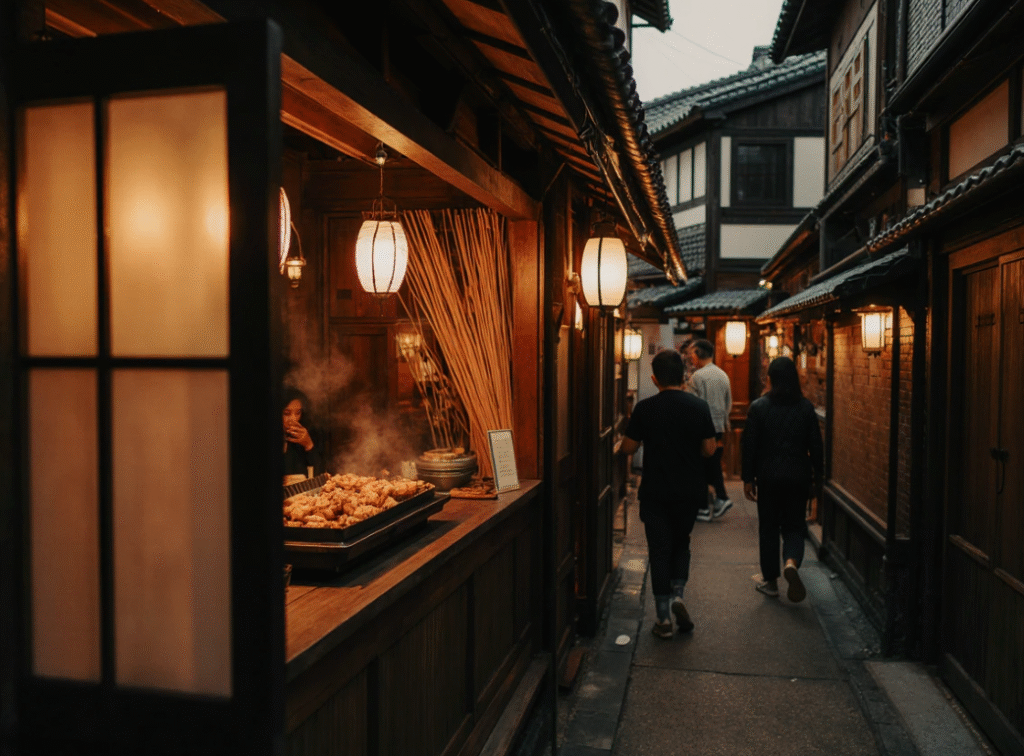
Authentic Pontocho Yakitori Restaurant in Kyoto – Best Yakitori Pontocho Experience
By the 1970s, some of these stalls had become permanent dining spots. The economic boom meant better ingredients. Chefs started refining techniques. What began as survival food evolved into craft.
Pontocho could have gone the same route as nearby Gion—becoming a tourist district with high prices and mediocre food. It didn’t, largely because the narrow alley can’t accommodate tour buses. The venues stayed small. Many remained family-run. The quality survived because the economics stayed local.
One alternative that didn’t happen: Pontocho nearly became an upscale kaiseki district in the 1980s. Property developers proposed converting the alley into formal dining rooms with geisha entertainment, following Gion’s model. The narrow layout killed the plan—kaiseki requires large kitchens for multi-course preparation and space for traditional floor seating. Yakitori needed only a small grill and counter.
That constraint preserved Pontocho’s accessibility. Prices stayed reasonable relative to Kyoto’s luxury dining. The focus remained on craft rather than ceremony. Today’s Pontocho represents what happens when physical limitations force authenticity—venues couldn’t scale up, so they had to stay excellent instead.
Where to Find the Best Yakitori Pontocho
- Yakitori Kazu sits midway down the alley. The counter seats seven people. Chef Kazu sources his chicken from a single farm in Shiga Prefecture and receives the birds within 24 hours of slaughter. His tsukune includes minced cartilage that gives each bite a slight crunch. Food critics consistently rank this among the best yakitori in Kyoto for its ingredient sourcing and technique. Expect to pay ¥4,000-6,000 ($27-40) per person. No reservations. Show up at 5:30 PM when they open or wait 90 minutes.
- Torito specializes in rare cuts. They serve sasami (breast tenderloin) with wasabi and bonjiri that’s been aged for two days to concentrate the flavor. The chef speaks enough English to explain each skewer. Making yakitori reservations Pontocho through your hotel concierge is essential for this venue, especially during cherry blossom and autumn leaf seasons. Budget ¥5,000-7,000 ($33-47) per person.
- Pontocho Robata isn’t exclusively yakitori—they grill vegetables, fish, and beef too—but their chicken liver is the best I’ve had in Kyoto. They soak it in milk first to remove any bitterness, then grill it until the outside firms up but the inside stays creamy. Less specialized than the yakitori-only spots, but good for groups with mixed preferences. ¥3,500-5,000 ($23-33) per person.
According to the Japan National Tourism Organization, Pontocho represents one of Kyoto’s five traditional hanamachi (geisha districts), and its dining culture remains closely tied to this heritage.
“Order omakase (chef’s choice) instead of selecting individual skewers. The chef will start with lighter flavors—breast meat with salt—then progress to richer cuts like thigh and liver with tare sauce. You’ll taste the full range of textures and seasonings in the right sequence. It costs the same but the experience is better.”
Best Yakitori Kyoto: Beyond Pontocho Alley
Pontocho concentrates atmosphere, but several neighborhoods offer equivalent chicken quality at lower prices.
Kiyamachi runs parallel to Pontocho, one block west. The setting is less traditional—modern bars replace wooden machiya—but yakitori Kyoto standards remain high at venues like Torikichi and Kushiyaki Tori Yamamoto. Prices drop 20-30%: expect ¥3,000-4,500 ($20-30) per person instead of Pontocho’s ¥5,000-7,000. Same chicken farms, same binchotan charcoal, similar chef training. You sacrifice atmosphere for value.
Kyoto Station’s underground floors have standing yakitori bars popular with local office workers. These spots serve simpler preparations—primarily momo, negima, and tsukune—but execute them perfectly. Prices start at ¥150-200 ($1-1.50) per skewer. Not romantic. Not atmospheric. Authentically local. Try Torisei Porta or Kushikura inside Porta underground mall.
Fushimi, Kyoto’s sake district, pairs yakitori with locally brewed alcohol. Several izakayas offer tasting sets: three regional sake varieties with five skewers selected to complement each one. Budget ¥4,000-5,000 ($27-33) for the pairing experience. For travelers wanting budget yakitori Kyoto options without sacrificing quality, Fushimi delivers better value than tourist-focused districts.
The trade-off is always atmosphere versus cost. Pontocho yakitori charges premiums for the setting—the narrow alley, paper lanterns, river views, and the visceral sense of old Kyoto. Other neighborhoods provide equivalent chicken at 30-40% less but without that immersive historical context.
Three Common Mistakes (And Their Cost)
Mistake 1: Going during peak dinner hours (7-9 PM)
Tourists read that Pontocho is beautiful at night and arrive at 8 PM expecting to walk in. Every venue has a line. The narrow alley gets crowded. You’ll wait an hour minimum, often standing in the cold with no place to sit.
The cost: You waste 60-90 minutes of your evening, get frustrated, and potentially give up to find food elsewhere. If you have limited time in Kyoto, that’s an entire evening activity lost. For a 4-day trip to Kyoto, losing one evening represents 25% of your dining opportunities.
Better approach: Arrive at 5:30-6 PM when places open. Most yakitori spots start their charcoal around 5:00 PM. Early arrival means no wait, better service (the chef isn’t overwhelmed), and you still have time for other activities afterward.
Mistake 2: Not bringing cash
Many grilled skewer restaurants in Kyoto don’t accept cards. The economics of small establishments with tight margins means credit card fees eat into profits. Some places added card readers during COVID, but plenty haven’t.
The cost: You find a spot, wait for a table, sit down, eat, then discover they only take cash. The nearest ATM is a 10-minute walk. You’re embarrassed. The staff is frustrated. Your dinner ends awkwardly.
Better approach: Withdraw ¥15,000-20,000 ($100-135) before heading to Pontocho. That covers dinner for two with drinks at any venue. Japanese ATMs at 7-Eleven stores accept foreign cards reliably.
Mistake 3: Ordering too much at once
Pontocho Yakitori is meant to be eaten fresh off the grill. If you order ten skewers upfront, the first ones will be cold by the time the last ones arrive. The fat congeals. The skin loses its crispness.
The cost: You pay premium prices for lukewarm food that doesn’t taste as intended. The difference between hot-off-the-grill yakitori and room-temperature yakitori is dramatic—you’re essentially downgrading a ¥500 skewer to convenience store quality.
Better approach: Order 3-4 skewers at a time. Eat them. Order more. Japanese dining spots don’t rush you out. Taking your time and ordering in waves is expected.
What Guidebooks Don’t Tell You About Pontocho Chicken Skewers
Reservation systems operate differently than Western restaurants. Most yakitori Pontocho venues don’t use OpenTable or online platforms. They take reservations by phone only, often only in Japanese. Your hotel concierge becomes essential—they call ahead, explain your preferences, and confirm timing. Some places refuse reservations entirely, running strict first-come-first-served systems.
Solo diners receive better service than groups at counter-only establishments. The chef can interact directly, adjust preparations based on your reactions, and create personalized sequences. Groups of 3-4 get split across counter sections or moved to back tables. Solo travelers seeking the best yakitori Pontocho experience should specifically request counter seating when arriving.
Many venues stop serving two hours before posted closing times. A restaurant listing “open until 11 PM” often stops seating at 9 PM and takes final orders at 9:30 PM. They need time to clean grills, settle accounts, and prep for next day. Arriving at 10 PM means getting turned away despite the “open” sign.
The plastic food models outside aren’t decoration—they’re functional menus for non-Japanese speakers. Take photos of dishes you want, show them to staff inside, and point. This isn’t rude. It’s practical. The models exist specifically for this purpose.
Pontocho has unspoken dress codes during yuka season (May-September). Winter dining accepts casual clothes. Summer riverside seating attracts couples on dates and business entertainment. Shorts and sandals will get you seated, but you’ll feel underdressed compared to collared shirts and dresses around you.
What to Drink With Pontocho Chicken Skewers
Beer is the default pairing. Most venues serve Asahi or Kirin Super Dry in small glasses. The carbonation cuts through the fat. The cold temperature refreshes between bites.
Highball—whisky and soda—is increasingly popular. The whisky adds subtle smokiness that complements the charcoal flavor without overwhelming the chicken.
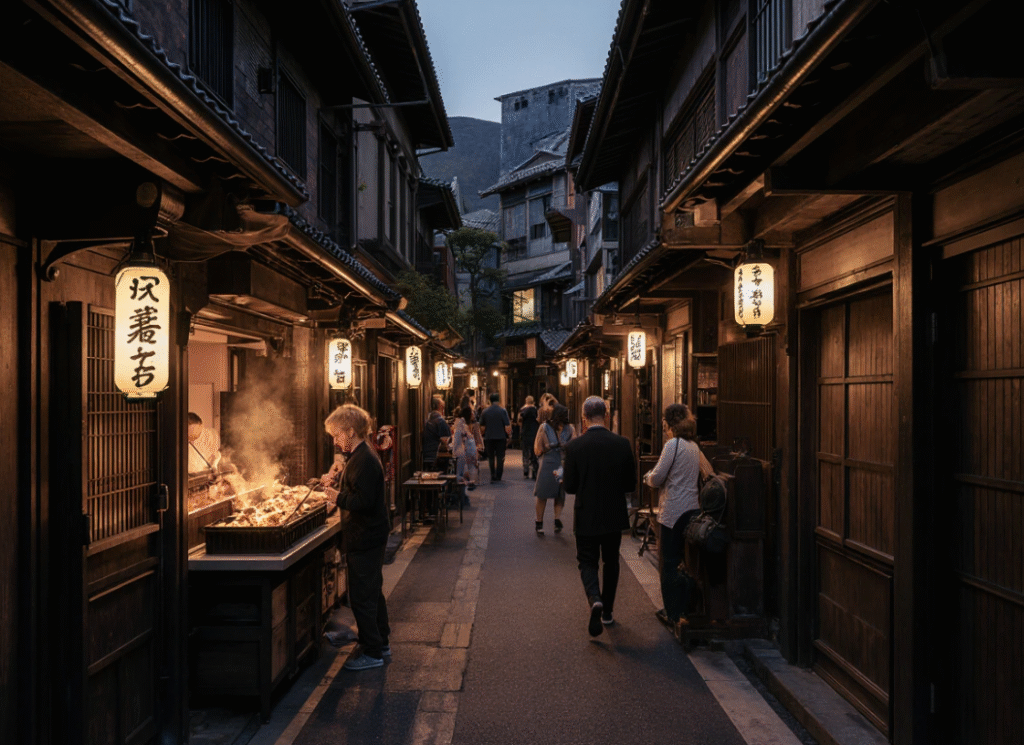
Best Yakitori Pontocho – Enjoy Traditional Yakitori in Kyoto’s Iconic Alley
Sake works but requires more thought. The tare sauce already has sake in it, so you want something that doesn’t duplicate flavors. Ask for karakuchi (dry) sake served cold. Avoid the sweet varieties.
Avoid wine. The tannins in red wine clash with the tare sauce. White wine gets lost.
Understanding Pontocho’s Layout and Atmosphere
Pontocho runs north-south for 500 meters between Shijo Street and Sanjo Street. According to Kyoto City Official Travel Guide, the alley attracts over 2 million visitors annually, with yakitori in Kyoto’s Pontocho district accounting for approximately 35% of all dining establishments. The passage is barely wide enough for two people. Traditional wooden buildings lean inward from both sides. Paper lanterns mark entrances after sunset.
Most Pontocho yakitori shops occupy ground floors of two-story machiya houses. Seating is limited—counters with 6-10 stools, or a few small tables. Kitchens are tiny. Everything happens in view. You watch the chef brush tare sauce, rotate skewers, and judge the exact moment when sugars caramelize without burning.
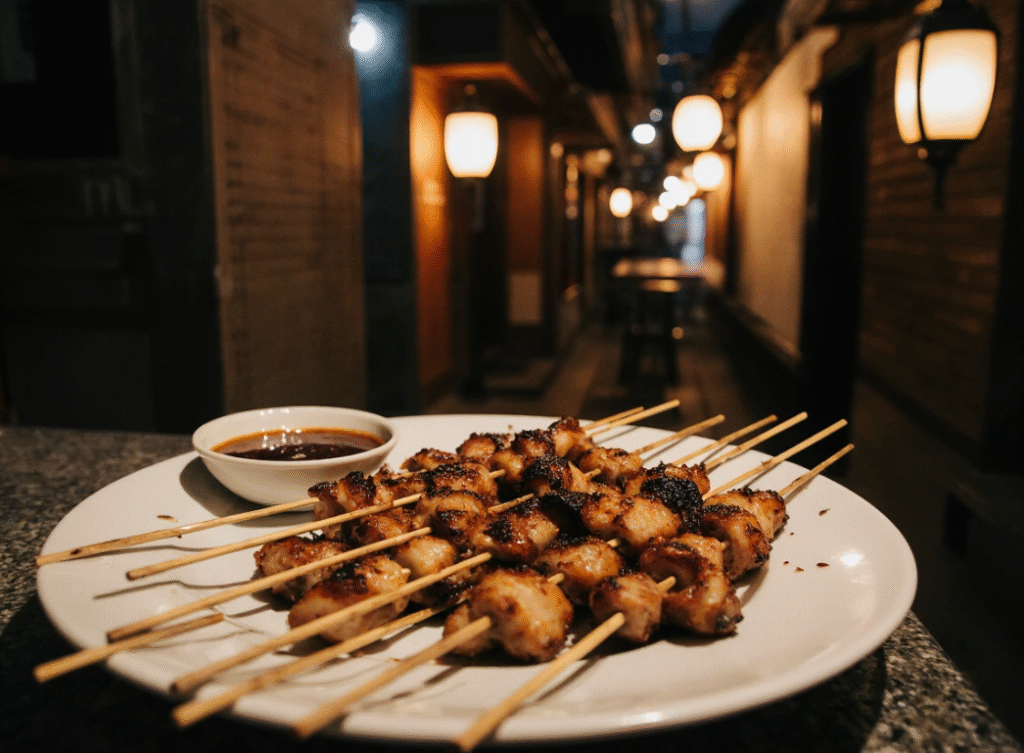
Best Yakitori Pontocho – Grilled Chicken Skewers with Traditional Kyoto Flavor
The atmosphere is informal but focused. People dress normally—jeans work fine—but attention to food is serious. Conversations happen in lowered voices. The focus stays on the grill and the careful timing each skewer requires.
Some venues have yuka platforms—elevated river-facing seats that transform the meal into something ceremonial. These platforms extend over the Kamogawa River, available May through September when weather permits. You sit on cushions, eat yakitori Kyoto style, and watch water flow below. The experience costs extra (typically ¥8,000-12,000 per person vs ¥5,000-7,000 standard) but provides Instagram-worthy settings and romantic atmosphere impossible to replicate indoors.
The Kyoto City Official Travel Guide notes that yuka dining platforms are typically available from May through September, weather permitting.
The Real Drawbacks of Pontocho Yakitori
- The alley is claustrophobic. If you’re uncomfortable in tight spaces, Pontocho will stress you out. People squeeze past each other constantly. Interiors are small. There’s no personal space buffer.
- It’s expensive for what you get. Yakitori in Tokyo costs 30-40% less for similar quality. You’re paying for the Pontocho location and atmosphere. If budget is your priority, other Kyoto neighborhoods offer better value.
- Service can be impersonal. The best spots are always busy. Chefs focus on grilling. They’re polite but not chatty. If you want an interactive dining experience with lots of explanations, some places will disappoint you.
- It’s not family-friendly. The yakitori shops are designed for adults having drinks after work. There are no high chairs. No kids’ menus. The spaces are too small for strollers. The atmosphere is too refined for children to enjoy.
These aren’t fixable problems. They’re inherent to what makes Pontocho Yakitori special—the historic buildings, the narrow lane, the adult-focused nightlife culture. If these factors matter to you, choose a different neighborhood.
Comparing Pontocho Yakitori Options: Which Type Fits You
| Venue Type | Average Cost | Atmosphere | Best For |
| Yakitori-only specialists | ¥5,000-7,000 ($33-47) | Quiet, focused counter seating | Solo diners, serious food enthusiasts |
| Mixed robata grill | ¥3,500-5,000 ($23-33) | More casual, table seating available | Groups, people wanting variety |
| Yuka (river platform) dining | ¥8,000-12,000 ($53-80) | Premium, romantic outdoor setting | Special occasions, couples |
For those seeking budget Yakitori Kyoto options, the mixed robata grill venues offer the most value. They provide authentic charcoal-grilled chicken at lower prices while maintaining quality standards.
The economics explain the price gaps. Yakitori specialists source chickens from single farms, age meat for specific periods, and employ chefs with 10+ years training. Their overhead runs higher—premium ingredients, skilled labor, limited volume. Mixed robata venues buy from broader supplier networks, employ less specialized cooks, and serve higher table turnover.
Think of it like dedicated sushi counters versus Japanese restaurants that serve sushi plus other dishes. The specialist always edges out the generalist on core products, but the generalist offers flexibility and better value for groups with mixed preferences. For travelers prioritizing budget yakitori Kyoto experiences, mixed robata venues provide the best cost-to-quality ratio.
Timing Your Visit to Pontocho
Summer (June-September) is when the yuka platforms open. The weather is hot and humid, but eating above the river while the sun sets makes up for the discomfort. Reservations are essential during this season.
Winter (December-February) is less crowded but cold. The narrow alley doesn’t trap much heat. Some shops have kotatsu (heated tables), but most don’t. Dress warmly.
Spring and fall are optimal. Comfortable temperatures. Cherry blossoms in April or autumn leaves in November add visual appeal. But these are also peak tourist seasons, so crowds increase.
“Visit Pontocho twice—once in early evening to walk the alley before crowds arrive, then return at 5:30 PM to eat. Take photos during your first pass when light is better and the lane isn’t packed. Then focus on food during your actual meal without rushing or worrying about documentation.”
How to Navigate Best Yakitori Pontocho Like a Local
Walk slowly down the entire alley before choosing where to eat. Check the displays outside—most places show plastic food models or photos of their dishes. Look at prices. Observe the crowd inside.
Avoid venues with aggressive touts outside. If someone is pulling people in, the food probably isn’t good enough to attract customers naturally.
Pontocho Chicken Skewers – Authentic Yakitori Experience in Kyoto’s Historic Alley
Look for spots where locals are eating. If the counter has several Japanese businessmen who clearly aren’t tourists, that’s a reliable signal.
Don’t be intimidated by Japanese-only menus. Point at what other diners are eating. Say “kore o kudasai” (I’ll have that). Most chefs appreciate the gesture and will help you order.
The alley is one-way for foot traffic during peak hours. Enter from Shijo Street, exit at Sanjo Street. Going against the flow is possible but awkward.
Behind the Curtain: What Most Guides Don’t Tell You
The chickens used in high-end Pontocho venues are jidori—heritage breed chickens raised under specific standards. These birds reach minimum 80 days age at slaughter compared to industrial chickens at 50-55 days. They cost three times more than standard chicken. The extended growth develops muscle structure and fat marbling that younger birds can’t match.
Most Pontocho chefs apprenticed 8-10 years before opening their own establishments. Training includes learning to break down whole chickens with minimal waste, prepare each cut properly, and master grill timing. According to the Japan Yakitori Association, proper binchotan technique requires minimum three years to achieve consistent temperature control. What appears simple—grilling chicken on sticks—demands intense dedication.
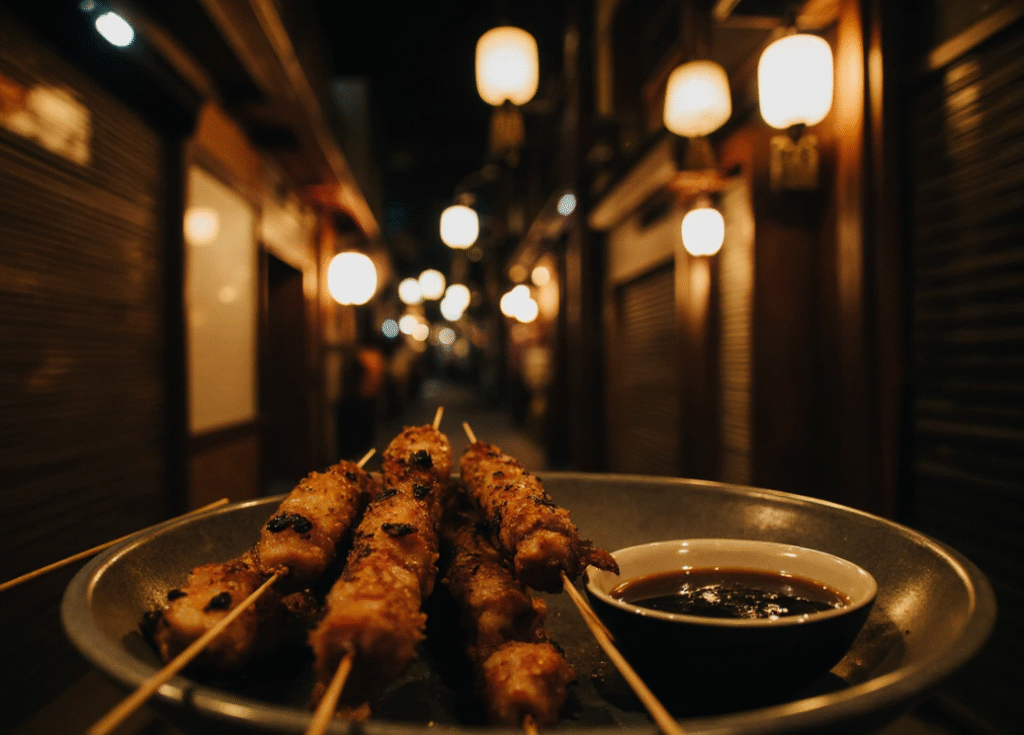
The tare sauce in each shop is decades old. Chefs continuously add new sauce to the pot but never empty it completely. Some tare bases have been maintained for 40+ years. The aged sauce develops complex flavors—caramelized sugars, umami depth, subtle fermentation—impossible to replicate with fresh ingredients. You’re tasting accumulated history with every bite.
Some establishments follow guidelines similar to those outlined by the Japan Yakitori Association, which promotes traditional grilling techniques and quality standards across the country.
Making the Most of Your Pontocho Yakitori Experience
Pontocho works best as part of a larger evening in Kyoto. Eat yakitori, then walk along the Kamogawa River. Or start with drinks in Pontocho, then move to nearby Gion for dessert.
Don’t try to rush the experience. Pontocho Yakitori is designed for slow eating and drinking. Budget 90 minutes minimum.
Learn basic Japanese phrases:
- “Oishii” (delicious) – use this after eating something you like
- “Okawari” (one more) – when you want to order the same skewer again
- “Oaiso onegaishimasu” (check please) – when you’re ready to leave
Staff appreciate the effort even if your pronunciation is terrible.
Consider visiting on a weeknight instead of Friday or Saturday. The quality is identical, but the crowds thin out significantly. A Tuesday or Wednesday evening gives you more options and shorter wait times.
Consider booking food tours that include Pontocho as part of broader evenings. Several Kyoto tour companies offer 3-hour experiences covering multiple neighborhoods—yakitori in Pontocho, dessert in Gion, drinks in Kiyamachi. The structure solves the “where next” question and provides cultural context you’d miss dining independently.
Budget ¥15,000-20,000 ($100-135) per person for guided tours. Yes, it costs more than independent exploration, but you gain English explanations of what you’re eating, confirmed reservations at quality venues, and efficient navigation through crowds. For first-time visitors to Kyoto with limited days, the time-versus-value trade-off makes sense—you experience more in three hours than you’d manage in six hours of independent wandering.
Plan your Pontocho visit around the 5:30-6:30 PM window for optimal experience. Arrive early enough to avoid waits, late enough that chefs have properly heated their binchotan charcoal. Bring cash. Order in waves rather than all at once. Follow the flavor progression from light to rich. The best yakitori Pontocho offers represents Kyoto’s dining culture at its most accessible—serious craft in informal settings, where centuries of tradition meet nightly practice.
If you’re traveling with someone who doesn’t eat chicken, Pontocho has other options—tempura, sushi, kaiseki. But finding the best Yakitori Pontocho has to offer remains the alley’s primary draw. Choose accordingly.