
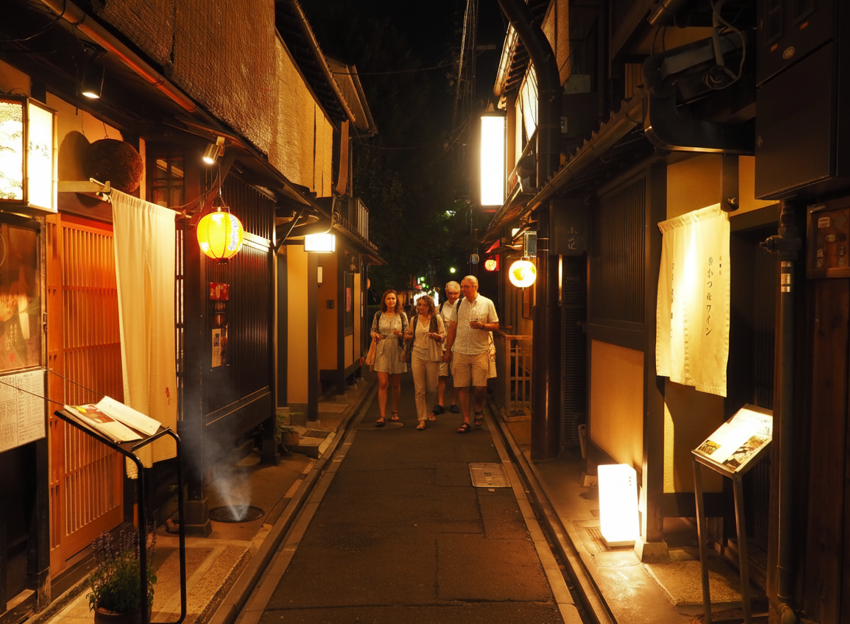
This narrow lane between the Kamogawa River and Kiyamachi Street transforms completely after sunset. What looks like an ordinary alleyway by day becomes an atmospheric corridor of lantern light, traditional architecture, and cultural encounters by night. Our expert-led tours reveal what independent travelers miss when they simply walk through without context.
Book your trip to Pontocho Park
What You’ll Find Here
Our guided tours of Pontocho Park offer a complete immersion into Kyoto’s evening culture, combining history, cuisine, and unforgettable sights. Each experience is crafted to reveal the authentic heart of this historic district.
Guided Walking Tours through Pontocho Alley
Navigate the narrow, atmospheric lanes with expert local guides who know every corner and hidden gem of this historic district. Our small group format ensures personal attention and an intimate experience.
Geisha & Maiko Cultural Insights
Learn about the fascinating world of geisha and maiko apprentices who still practice their arts in Pontocho. Understand the traditions, training, and cultural significance of these iconic cultural ambassadors.
Edo-Period Architecture and History
Discover the stories behind Pontocho’s beautifully preserved buildings dating back to the Edo period. Our guides explain the architectural features and historical significance of this unique district.
Local Dining and Traditional Izakaya Visits
Sample authentic Kyoto cuisine at carefully selected establishments. From street food to traditional izakaya pubs, experience the flavors that locals have enjoyed for generations in this culinary hotspot.
Scenic River Views and Night Photography
Capture stunning photos of the Kamogawa River and the illuminated alleyways of Pontocho. Our guides know the best spots and angles for memorable night photography in this photogenic district.
Every corner of Pontocho holds tales passed down through generations. Our guides share the legends, ghost stories, and historical anecdotes that bring this district’s rich past to life.
Choose Your Tour to Pontocho Park
Our guided tours of Pontocho Park are designed to provide an authentic, immersive experience of Kyoto’s most atmospheric district. Here’s what you need to know before booking.

Kyoto: Private Photoshoot Service
- Professional photo session (not a tour guide)
- Kimono rental not included
- No shooting at Kiyomizu-dera Temple
- Around 300+ original high-res JPEG photos
- Retouched/edited images included
- Online album for easy downloads
- Fast delivery within 2–3 days
- Unique Kyoto locations
- Solo, couples, and families welcome
- Candid, natural style – perfect even if you don’t know how to pose
- Local photographer with deep Kyoto knowledge

Kyoto: Gion & Pontocho Food Tour with 13 Dishes
- Small-group evening tour through Gion and Pontocho
- Guided by a local expert with deep cultural knowledge
- Learn about Kyoto’s geisha culture and hidden traditions
- Start at the illuminated Yasaka Shrine with cultural storytelling
- Enjoy a cozy izakaya dinner in Gion featuring
- Stroll through Gion Shirakawa and visit a shrine frequented by geishas

Cycle Kyoto’s Hidden Gems & Gion Stroll
- Explore hidden Kyoto by bike and on foot
- Ride scenic riverside paths and quiet local streets
- Visit a hidden shrine with natural spring water
- Stop at the Kyoto Imperial Palace and a Zen temple
- Pass through local university campuses and calm neighborhoods
- Discover Shimo-gamo Shrine (UNESCO site) and its sacred forest
- Experience a unique river junction and illuminated riverside route
- After biking, walk through Gion or Pontocho, Kyoto’s geisha districts

Perspectives in Pontocho
Experience Pontocho through different lenses, each revealing unique aspects of this historic district’s character and charm. Our specialized tours focus on these distinctive perspectives.
Spirit of the Streets
Experience how Pontocho uniquely merges vibrant nightlife with centuries-old traditions
Voices of the Past
Hear the stories of the people who have lived and worked in Pontocho’s teahouses through the ages
Cuisine After Dark
Explore Kyoto’s distinctive street food and izakaya culture in this culinary haven
Do you have any questions? Feel free to contact us anytime.
Our team is ready to help you plan the perfect Pontocho experience

Every Tour is a Conversation with Kyoto’s Past
Our guided experiences are designed to create meaningful connections between visitors and Pontocho’s rich cultural heritage. Through storytelling, sensory experiences, and personal interactions, we transform a simple walk into a journey through time.
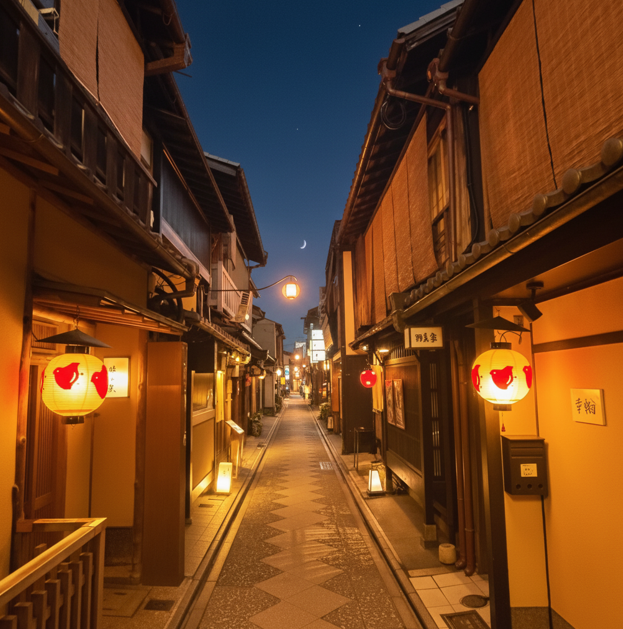
Pontocho Alley: Understanding Kyoto’s Most Atmospheric Street
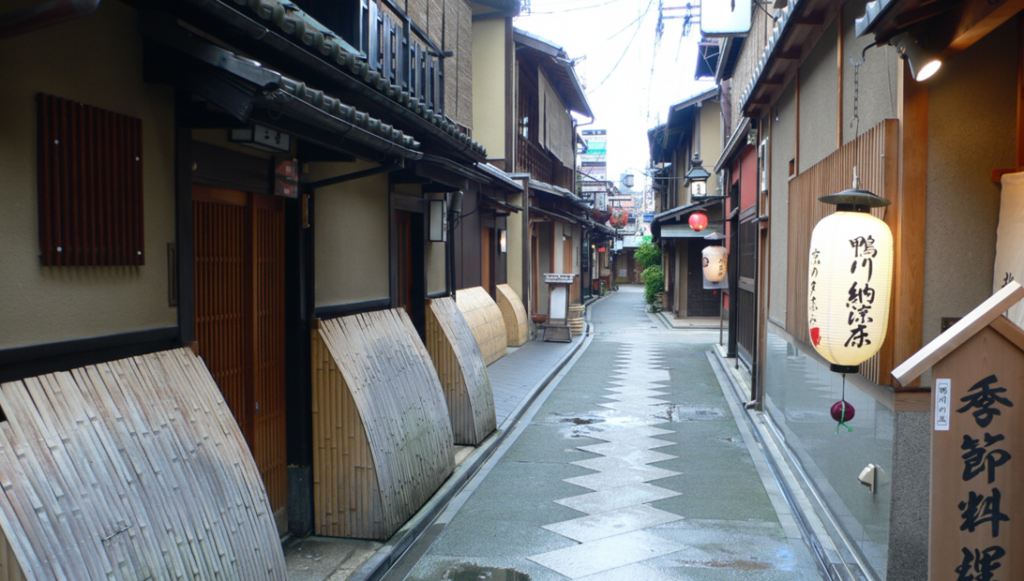
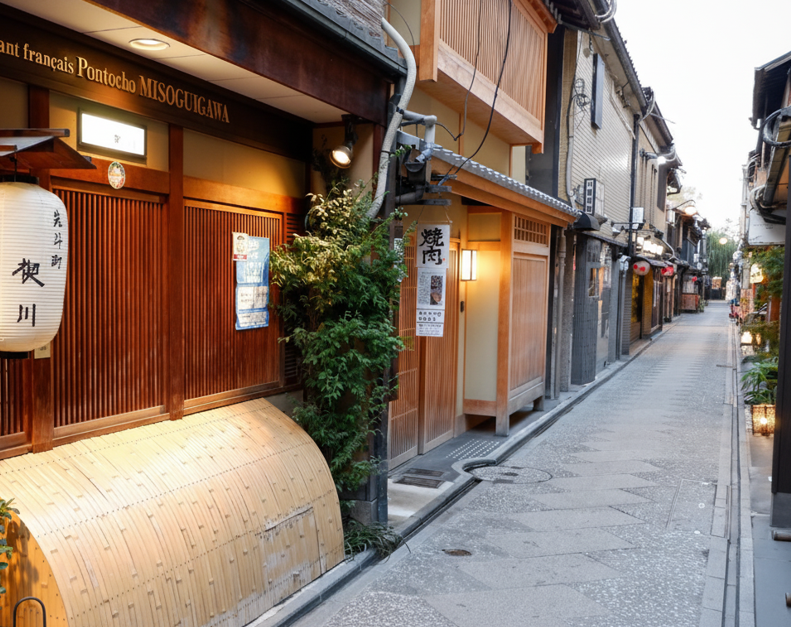
This 500-meter corridor runs parallel to the Kamogawa River, connecting Shijo Street in the south to Sanjo Street in the north. The narrow width—just 3-4 meters in most sections—creates an intimate atmosphere impossible to replicate in modern districts.
What makes this alley architecturally significant?
The preserved Edo-period buildings feature traditional machiya townhouse construction with wooden lattice fronts (kōshi) and narrow depths extending back from the street. These structures survived World War II bombing and 1960s-70s development pressure that demolished similar neighborhoods throughout Kyoto.
Our guides decode the architectural language
The lattice pattern spacing reveals whether establishments historically served merchants or samurai. Door placement indicates original building purposes. Lantern styles signal business types—ornate metal lanterns mark upscale restaurants, while simple paper lanterns identify casual izakaya.
Between May and September, the eastern side transforms
when restaurants install wooden platforms extending over the river below. This seasonal change creates two distinct experiences: summer’s open-air riverside atmosphere versus winter’s intimate interior-focused character.
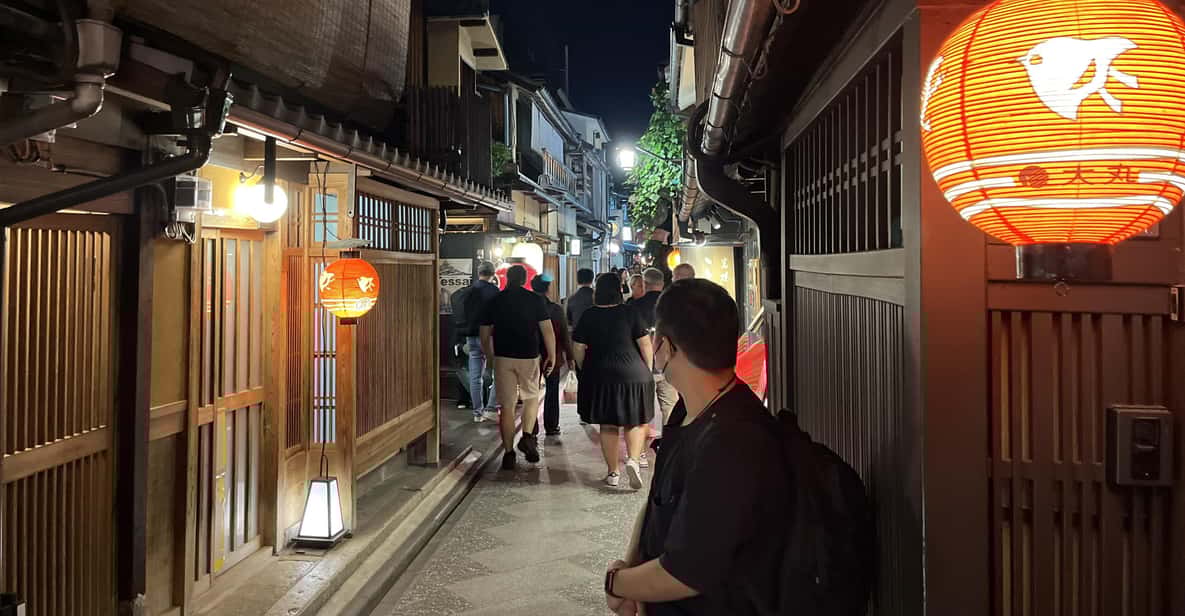
Our evening tours navigate this corridor during optimal lighting conditions (5:30-7:00 PM) when lanterns glow, restaurants begin service, and the district pulses with energy. You’ll walk the same stones where geisha have traveled to appointments for 250+ years, now understanding the cultural context that makes each step meaningful.
Walking the Kamogawa River: Pontocho’s Natural Backdrop
The Kamogawa River defines this district’s entire character and history. Flowing north to south through central Kyoto, the river provided the original reason for settlement here—a sandbar between two waterways that merchants recognized as valuable real estate in 1670.
Photography enthusiasts should note: The river offers unobstructed sunset views between buildings—optimal shooting window occurs 5:45-6:15 PM when the sky glows but lanterns have already illuminated. Our photography-focused tours position you at calibrated locations for these light-transition moments that last mere minutes.
The river isn’t just scenery. It’s the cooling system, the view, the historical reason this district exists, and the natural element that makes summer dining here genuinely comfortable rather than simply atmospheric.
Why the river matters to your tour experience
First, it creates natural cooling during Kyoto’s intense summer heat. Evening breezes flow upstream, dropping temperatures 3-5 degrees Celsius along the riverbank compared to inland streets. Second, the river provides scenic contrast—stepping from narrow alley darkness to open riverbank reveals the district’s eastern side in full perspective.
Our tours include strategic river viewpoints
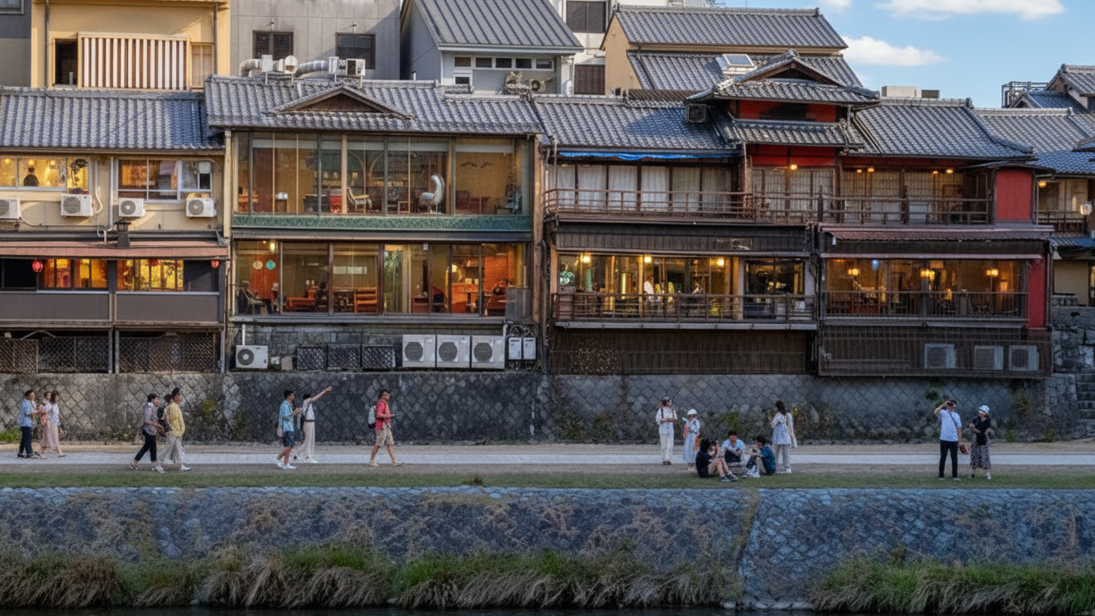
Where you’ll understand the district’s geography. From the western bank, you can see how restaurants extend their wooden platforms (kawayuka) over the water between May and September. The platforms hover 2 meters above the river surface, allowing diners to catch breezes while watching birds fish in the shallows below.
Seasonal water levels change the visual experience
Summer sees lower, slower flow with visible sandbars and wading birds. Autumn brings increased volume from mountain rainfall, creating rushing water sounds that provide ambient background throughout dinner service. Winter’s crystal-clear shallow flow allows views of river stones and occasional jumping fish.
Photography enthusiasts should note: The river offers unobstructed sunset views between buildings—optimal shooting window occurs 5:45-6:15 PM when the sky glows but lanterns have already illuminated. Our photography-focused tours position you at calibrated locations for these light-transition moments that last mere minutes.
The river isn’t just scenery. It’s the cooling system, the view, the historical reason this district exists, and the natural element that makes summer dining here genuinely comfortable rather than simply atmospheric.
Pontocho Alley Kyoto Official Tourism
Exploring Pontocho District: Beyond the Main Corridor
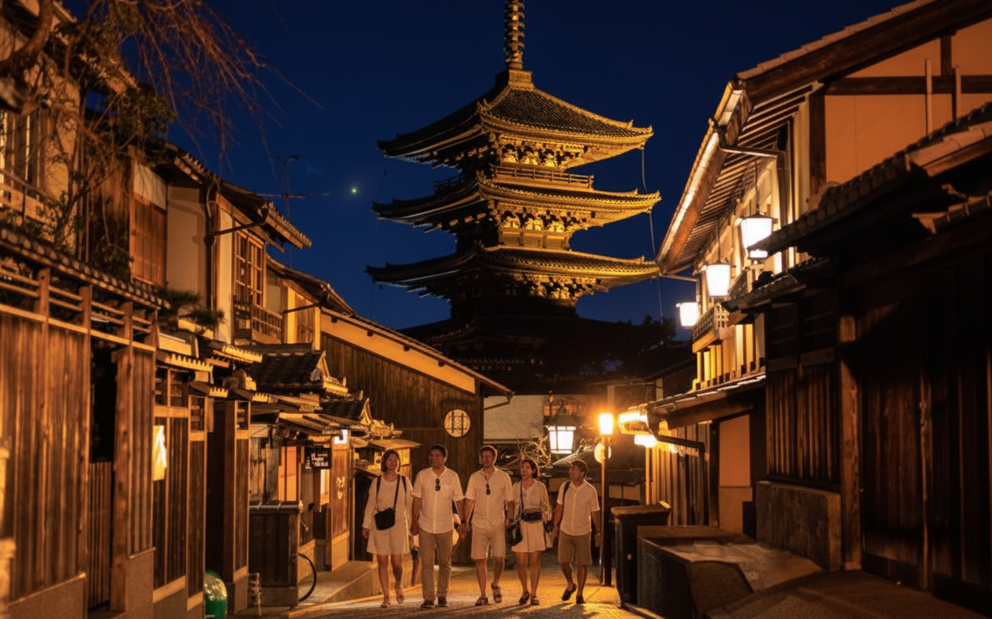
Most visitors see only the central alley and miss the broader neighborhood context. The district actually encompasses several connecting streets and hidden passages that reveal different cultural layers.
The district’s geography also explains seasonal patterns. Buildings on the eastern side (river-facing) can install summer platforms. Western-side establishments rely entirely on interior spaces year-round, meaning they invest more heavily in architectural details, interior design, and climate control systems.
Understanding this broader neighborhood context transforms a simple alley walk into a multi-layered cultural exploration. You’ll recognize patterns that help navigate other historic Kyoto districts throughout your trip.
Plan Your Visit to Pontocho in Kyoto
Pontocho Park Photos: Capturing Your Evening Experience
The district’s photogenic qualities attract photographers worldwide, from smartphone snapshots to professional portfolios. Understanding when and where to shoot determines whether you capture Instagram-worthy images or disappointing dark blurs.
Optimal photography timing: 5:45-6:30 PM specifically. Before 5:45 PM, lanterns haven’t achieved full glow impact. After 6:30 PM, restaurant crowds fill the alley making unobstructed shots nearly impossible. This 45-minute golden window delivers ideal conditions: lantern light contrasting against twilight sky, minimal pedestrian traffic, and natural light still supplementing ambient illumination.
Professional photo service tours include: Expert positioning at calibrated locations—the mid-alley point where lantern density creates maximum reflected light, the southern riverbank angle capturing both alley entrance and water reflections, the Shijo Bridge vantage showing the full district context. Technical guidance for low-light settings (smartphone and camera). Compositional coaching for storytelling images versus generic tourist shots.
What makes locations “photogenic” here isn’t obvious to first-time visitors. The best angles avoid straight-on alley shots (creates flat, dimensionless images) in favor of diagonal perspectives showing depth and leading lines. River photography requires understanding seasonal water levels—summer’s lower flow creates sandbars that ruin foreground composition, while autumn’s higher water provides cleaner reflections.
Common photography mistakes our tours help avoid: Using flash (destroys ambient lantern atmosphere and disturbs restaurant diners). Photographing geiko/maiko without permission (culturally disrespectful and increasingly restricted). Blocking the narrow alley while composing shots (creates pedestrian congestion and local frustration). Arriving at sunset expecting to shoot (by the time you arrive, optimal light has passed).
For smartphone photographers: Modern devices handle low-light exceptionally well here. Enable night mode, steady your hands against building walls for stability, and shoot multiple frames to choose the sharpest. Our guides identify locations with natural stabilization opportunities—doorway frames, stone posts, bridge railings that function as impromptu tripods.
Best Time to Visit Pontocho for Your Tour
Your experience changes dramatically based on season and time of day. Here’s what you need to know before booking. Evening tours (5:30-8:00 PM starts) deliver peak atmosphere. Lanterns illuminate around 5:30 PM creating the district’s signature ambiance. Geiko and maiko travel to appointments between 5:30-6:30 PM—highest sighting probability window. Restaurants begin dinner service, filling the corridor with cooking aromas and ambient energy. Our walking and food tours start at 5:30 PM specifically to capture this 90-minute alignment when everything peaks simultaneously.
Seasonal personality shifts affect your experience quality:
May-September (Summer Platform Season)
Restaurants install riverside platforms over the Kamogawa River, creating open-air dining opportunities. Evening temperatures 22-32°C with high humidity (70-85%) make river breezes genuinely refreshing, not just aesthetic. Our food tours include pre-reserved platform seating when available. Trade-off: This is peak season meaning higher prices and advance booking essential (2-4 weeks for premium dates).
October-November (Autumn Peak)
Comfortable temperatures (15-25°C), beautiful weather, and manageable crowds. No riverside platforms, but interior dining showcases traditional architecture and intimate atmosphere. This is Kyoto’s overall peak tourism season—book tours 3-4 weeks ahead for preferred dates.
December-February (Winter Low Season)
Cold temperatures (3-12°C) reduce foot traffic significantly. The alley feels most atmospheric with steam rising from restaurant vents, fewer tourists, and 20-30% lower restaurant prices. Our tours operate year-round—you’ll bundle up for the walk but warm up quickly during food stops. Best value season for budget-conscious travelers.
March-April (Cherry Blossom Season)
Kyoto’s highest tourism volume impacts everything. The alley itself has minimal cherry trees, but city-wide crowds affect restaurant availability and tour booking demand. Book 4-6 weeks ahead. Kiyamachi’s parallel canal provides excellent hanami (blossom viewing) in early April—our tours can incorporate this 5-minute detour.
Our recommendation for first-time visitors: Tuesday-Thursday evenings, October-November or February-March. You’ll capture essential atmosphere without overwhelming crowds, optimal photography conditions, and mid-season pricing. Summer kawayuka platform dining is worth scheduling specifically if riverside experiences interest you—but requires May-September dates.
Do you have any questions? Feel free to contact us anytime.
Our team is ready to help you plan the perfect Pontocho experience
What to Bring
- Comfortable walking shoes (you’ll be on your feet for 2-3 hours)
- Camera for capturing memorable moments
- Light jacket or sweater (evenings can be cool, especially near the river)
- Small amount of cash for any personal purchases
- Bottle of water (though drinks are included in food tours)
What Our Guests Say
Hear from travelers who have experienced our guided tours of Pontocho Park.

Sarah
from Australia
“The evening food tour through Pontocho was the highlight of our Kyoto trip. Our guide Akiko took us to places we never would have found on our own. The small izakaya experiences were authentic and delicious!”

Michael
from Canada
“As a photography enthusiast, the night photography tour was perfect. Our guide knew exactly where to position us for the best shots of lantern-lit alleys and the river. I got some of my best Japan photos here.”

Marko
from Italy
“The cultural insights were fascinating. Learning about geisha traditions while actually walking through Pontocho made history come alive. Our guide was knowledgeable and answered all our questions.”