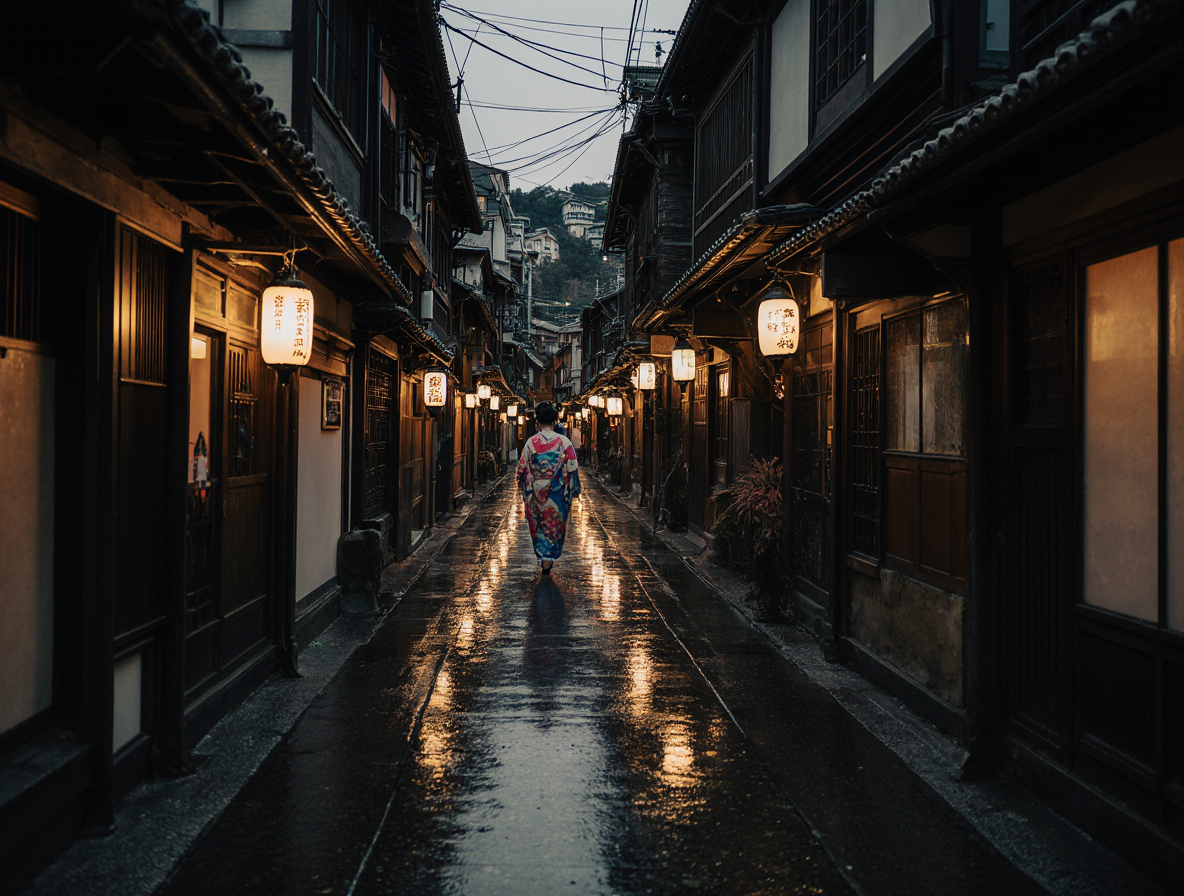

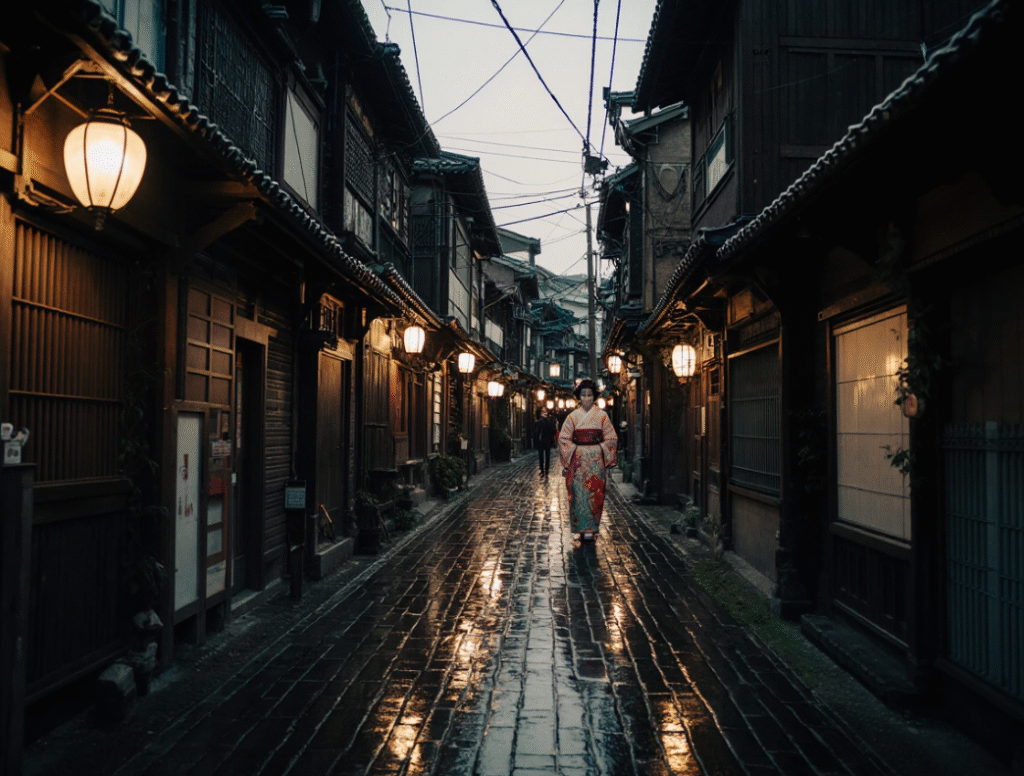
A 500-meter alleyway runs parallel to Kyoto’s Kamo River, barely wider than your outstretched arms. Wooden townhouses lean toward each other across stone paths. Lanterns cast amber light after sunset. This is Pontocho—one of five remaining geisha districts where tradition operates as daily business, not museum display.
You won’t find souvenir shops here. Instead, 80 restaurants pack into this narrow strip, serving everything from ¥2,000 yakitori to ¥25,000 kaiseki meals. The challenge? Most places require reservations, display no English signs, and operate according to cultural codes tourists rarely understand.
This comprehensive Pontocho Alley Kyoto guide covers everything first-time visitors and repeat travelers need: from reservation strategies and cultural protocols to hidden costs and optimal timing. Whether you’re planning your first visit or seeking deeper insights into this historic district, the information here addresses practical questions other Kyoto travel resources often overlook.
More about Pontocho:
- Pontocho Park Guided Tours
- Pontocho Alley Kyoto Dining Guide
- Pontocho Kaburenjo Theater
- Kamogawa Odori: Complete Guide to Kyoto’s Pontocho Spring Dance
How did Pontocho become Kyoto’s premier dining alley?
Until 1670, this area was an empty riverbank. The Takase River canal project created new land, and merchants immediately filled it with teahouses and entertainment venues. By 1710, Pontocho had formalized as an official geisha district.
The alley’s narrow profile came from tax strategy. Property owners paid taxes based on street frontage, not depth. They built skinny, deep structures—3 meters wide, 30 meters deep—to minimize costs. That shape remains today.
Pontocho could have evolved into a shopping arcade or red-light district. Instead, it maintained focus on upscale dining. The 1923 addition of riverside platforms (yuka) cemented its identity as a summer dining destination. Now that historical development directly impacts your visit: narrow buildings mean limited seating, geisha heritage means referral-only establishments, riverside focus means seasonal pricing swings.
For the district’s full origins and preservation story, see our Pontocho history guide.
What makes Pontocho different from Gion?
Both are historic geisha districts. The distinction lies in accessibility versus authenticity balance.
Gion’s Hanami-koji Street sees 50,000 daily visitors during peak season. Tour buses park nearby. Shops sell geisha-themed souvenirs. English menus appear everywhere. Pontocho receives one-fifth that traffic despite equal historical significance.
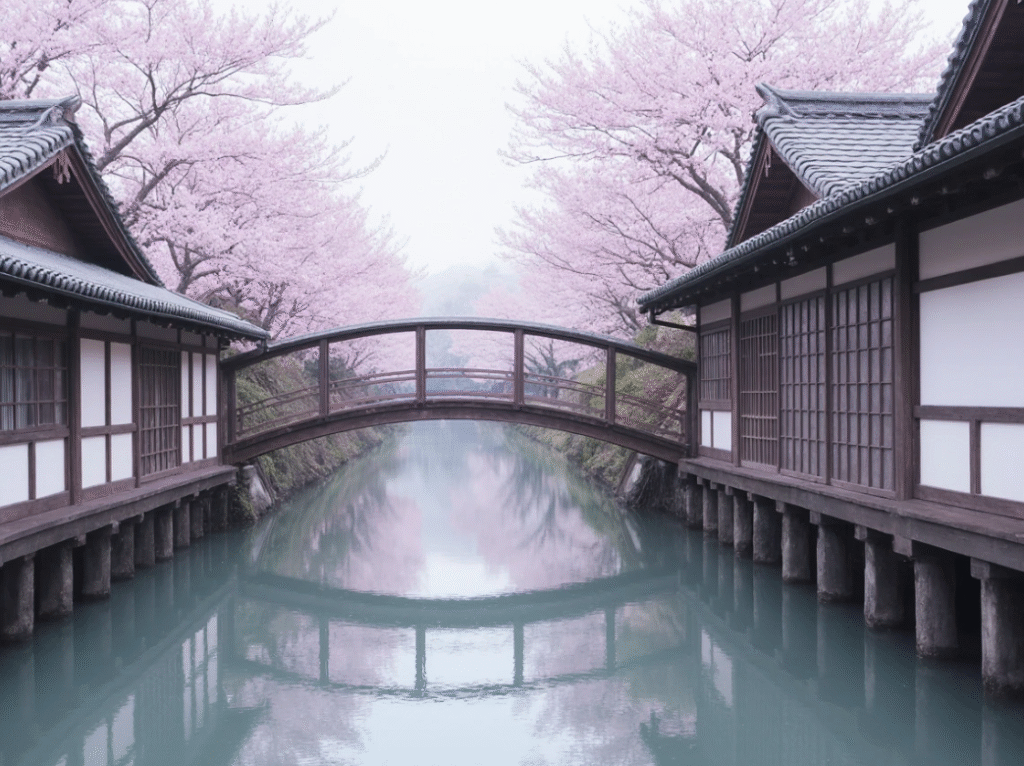
Why? The layout doesn’t accommodate crowds. The alley stays too narrow for buses, too dim for easy photos. Most restaurants skip plastic food displays and English signage. You’ll need to bow at entrances and remove shoes without prompting.
Gion offers a Kyoto atmosphere with tourist infrastructure. Pontocho offers a Kyoto atmosphere where locals actually spend their evenings. Choose based on your comfort level with cultural immersion.
Pontocho Alley Description: The Sensory Experience That Defines This District
Pontocho creates atmospheric immersion through narrow architecture, controlled lighting, and layered soundscapes unavailable in wider Kyoto streets.
Walking Pontocho engages multiple senses simultaneously. Stone pavement, worn smooth by 300 years of foot traffic, creates specific acoustics—your footsteps echo differently than on concrete. The 2.3-meter width at narrow points means building facades sit within arm’s reach. You smell charcoal smoke from yakitori grills mixing with incense from second-floor dining rooms.
The physical description of Pontocho Alley Kyoto differs significantly from typical Japanese streets. Standard Kyoto roads measure 8-12 meters wide with modern paving and LED streetlights. Pontocho maintains original stone surfaces, traditional paper lanterns, and pre-industrial width specifications. This creates tangible historical continuity—the alley’s proportions match 1710 documentation from Kyoto municipal archives.
Weather affects the sensory description dramatically. Summer humidity (75-85%) amplifies cooking aromas, making the entire alley smell like grilled fish and soy sauce. Winter cold (2-8°C) reduces scent intensity but enhances lantern glow against dark early evenings. Rain creates mirror reflections on stone surfaces, doubling visual complexity.
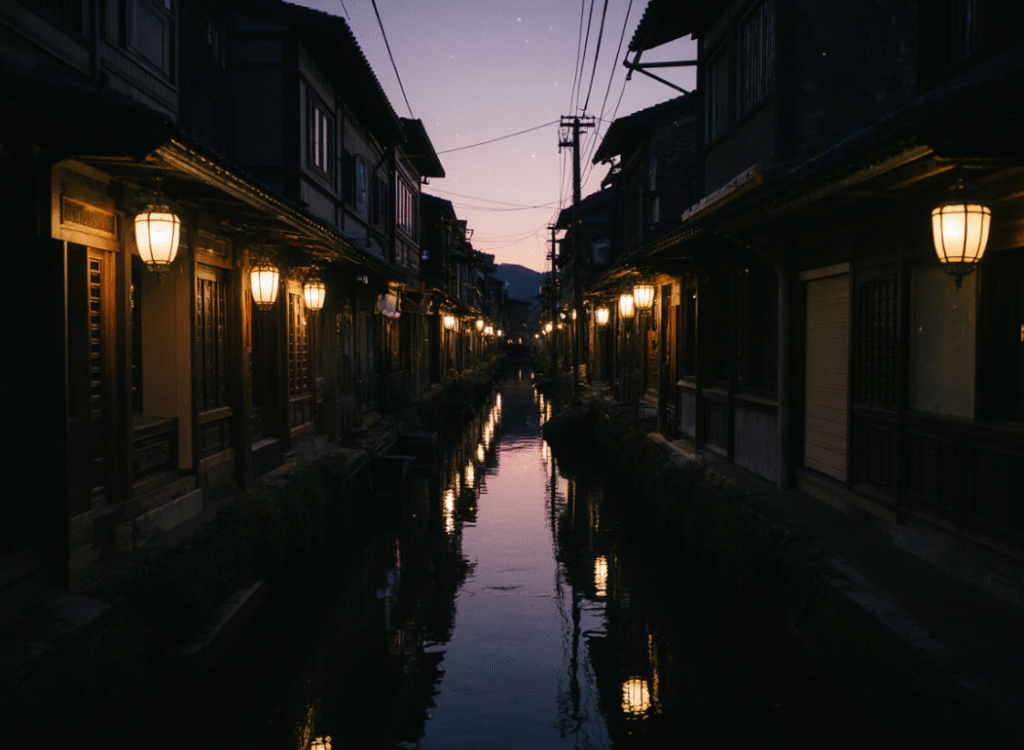
The alley’s lighting follows traditional principles: warm amber from paper lanterns, not white LEDs. This creates shadow zones between establishments, making the 500-meter walk feel longer than measured distance. Your eyes continuously adjust between dim passages and lit restaurant entrances.
Sound layers distinctively: shamisen music from upstairs windows, conversation fragments in Japanese, the clatter of ceramic dishes, water flowing in the adjacent Kamo River. No car engines. No loudspeakers. The acoustic environment dates from pre-mechanical eras.
Temperature varies by section. River-adjacent areas run 2-3°C cooler. Mid-alley sections trap heat from cooking operations. This microclimate variation creates physical progression through the space.
For Gion, Nishiki Market, Yasaka Shrine, and other nearby sights, see things to do near Pontocho.
The lattice-fronted wooden townhouses here have their own design language; see our Pontocho machiya architecture guide.
Where is Pontocho and how do you reach it?
The alley runs north-south between Sanjo Street and Shijo Street, one block west of the Kamo River. No official address exists—the Pontocho Association classifies it as private property.
- From Kyoto Station: Karasuma Subway Line to Shijo Station. Five minutes, ¥220. Exit 6, walk east on Shijo for three minutes to Kiyamachi Street. Turn left, walk one block north. The southern entrance appears on your right.
- From Gion: Cross Shijo Bridge westward. After the bridge, turn right onto the first small street. Four minutes walking.
Three entry points exist:
- Southern entrance at Shijo-Kiyamachi (most crowded, 6 PM-8 PM)
- Northern entrance at Sanjo-Kiyamachi (quieter, locals prefer this)
- Mid-point near Rokkaku Street (unmarked, easy to miss)
Use the northern entrance during dinner hours. You’ll avoid crowds and walk with foot traffic flow instead of against it.
For step-by-step directions from every station and the airport, see our guide on how to get to Pontocho.
Should you visit during the day or evening?
Evening. No debate.
Pontocho is a nightlife district that activates after 5 PM. During daytime, most establishments close or prep for evening service. Atmospheric lighting, lantern glow, crowd energy—none exist before sunset.
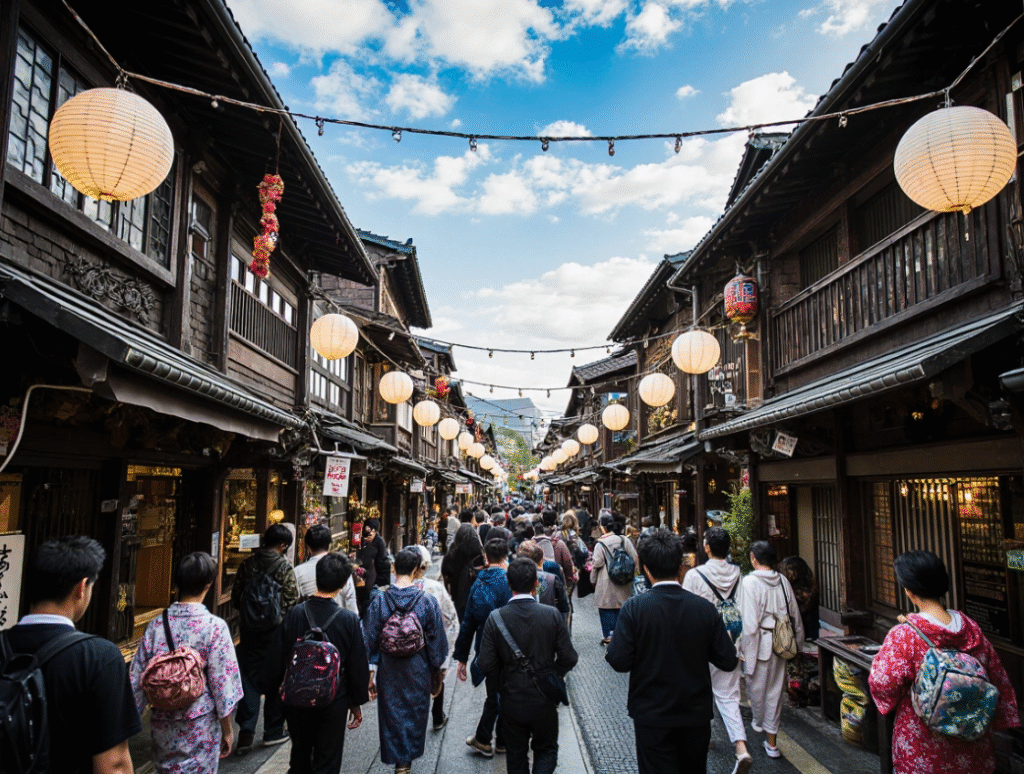
Walking Pontocho at 2 PM versus 7 PM compares to visiting an empty theater versus watching a performance. Same physical space, completely different experience. Restaurant facades look best under lantern light. The narrow alley creates shadow play after dark. Shamisen music flows from second-story windows.
Arrive between 6 PM and 7 PM. Walk the 500-meter length once while restaurants open and staff light lanterns. Have dinner. Walk through again after 8 PM at peak activity. Budget 45-60 minutes for the full experience.
How to Navigate Pontocho Like a Local: The Complete Information Guide
Successful Pontocho visits require understanding entry points, walking protocols, and hidden sections that guidebooks miss.
Three entry points serve different purposes. The southern entrance at Shijo-Kiyamachi handles 60% of tourist traffic—convenient but congested. The northern entrance at Sanjo-Kiyamachi attracts locals who prefer starting from the quieter end. The mid-point entrance near Rokkaku Street lacks signage, blending with surrounding streets. Most visitors miss it entirely.
Walking protocol matters in the 2.3-meter-wide sections. Japanese locals walk on the left, maintaining consistent flow. Tourists often walk center or switch sides randomly, creating bottlenecks. Follow left-side walking patterns, pause in doorway alcoves rather than mid-alley, and make space when groups approach from opposite directions.
The alley contains four distinct zones:
- Southern zone (Shijo to Rokkaku): Highest restaurant density, youngest establishments, most English menus
- Central zone (Rokkaku to Nishiki): Mix of traditional and modern, optimal reservation options
- Northern zone (Nishiki to Sanjo): Oldest establishments, minimal English support, highest local patronage
- River platforms (east side only): Seasonal May-September, premium pricing, advance reservations mandatory
Hidden elements appear throughout. Small shrines sit tucked between buildings—Tatsumi Daimyojin shrine near the northern end receives offerings from geiko before performances. Stone markers indicate original property boundaries from 1670s land development. Delivery alleys branch westward every 50-100 meters, used by suppliers and staff.
Pontocho Alley Kyoto Guide: Essential Pre-Visit Checklist
Use this checklist to prepare for your Pontocho visit and avoid the most common planning mistakes.
Three weeks before arrival:
- Contact hotel concierge with three preferred dining dates and budget range
- Research specific restaurants using Tabelog ratings (3.5+ recommended)
- Check Kamogawa Odori performance schedule if interested in geiko arts (https://www.japan-guide.com/e/e3906.html)
- Verify seasonal timing—riverside platforms operate May 1 to September 30 only
One week before arrival:
- Confirm reservations through hotel
- Download offline maps (Maps.me) with Pontocho location saved
- Prepare ¥20,000-30,000 cash—many establishments don’t accept cards
- Learn basic Japanese dining phrases: “Osusume wa nan desu ka?” (What do you recommend?)
Day of visit:
- Eat light lunch if planning kaiseki dinner (8-10 courses)
- Dress business casual minimum—avoid shorts, tank tops, flip-flops
- Arrive 10 minutes early for reservations (Japanese punctuality expectations)
- Bring small towel for potential bathroom situations
- Charge phone fully for low-light photography
During visit:
- Remove shoes at entrance without prompting
- Wait to be seated—don’t choose your own table
- Order alcoholic beverage if dining on riverside platforms (usually required)
- Speak quietly—volume should not carry to adjacent tables
- Request bill subtly with eye contact and gesture, not verbally
This Pontocho Alley Kyoto information checklist addresses the preparation gaps that cause most visitor frustrations. The Japan National Tourism Organization recommends similar pre-visit planning for all traditional dining districts (source: https://www.japan-guide.com).
What are the biggest mistakes tourists make here?
Mistake 1: Photographing geiko without understanding protocol
Tourists see a woman in full kimono and traditional hairstyle, then immediately raise cameras. Some block the alley for better angles. Others touch the kimono fabric.
The problem: Geiko are professionals going to work, not tourist attractions. These women earn ¥30,000-50,000 per evening appointment. Blocking their path makes them late, damaging their reputation with clients.
Local Kyoto residents actively intervene when tourists harass geiko. You might face public confrontation. Many geiko now travel by taxi instead of walking, reducing sightings by 40% over five years.
The cost: You damage cultural heritage, risk embarrassment, and contribute to tradition-altering problems. Want geiko photos? Attend Kamogawa Odori performance in May (tickets ¥5,000-6,000) where photography is permitted, or book private maiko experiences (¥30,000-50,000 per group).
Mistake 2: Visiting without reservations and expecting walk-in dining
Most quality restaurants require reservations days or weeks ahead. Casual places accepting walk-ins have 30-40 minute waits between 6 PM and 8 PM. Kyoto has 5,000 other restaurants. Many serve identical food with zero wait.
Mistake 3: Booking accommodation near Pontocho for “authentic Kyoto”
Pontocho sits in Kyoto’s entertainment district, not its cultural center. Surrounding blocks contain karaoke bars, nightclubs, chain restaurants. After 10 PM, drunk crowds fill sidewalks. Street noise penetrates windows until 2 AM, especially weekends.
Meanwhile, actual historical sites sit elsewhere. Kinkaku-ji takes 30 minutes by bus. Fushimi Inari requires 15 minutes by train. You’ll spend ¥2,000-3,000 daily on transportation, 90-120 minutes in transit, plus nights in a noisy area that doesn’t represent traditional Kyoto.
Better positioning: Book near Kyoto Station for transport access, or Higashiyama near Kiyomizu-dera for actual historic atmosphere.
For geisha and maiko culture, etiquette, and the okiya system, see our Pontocho geisha guide.
How do you choose a restaurant?
Roughly 80 establishments pack into 500 meters. No directory exists. No central reservations. Most lack English signage.
Price tiers:
- Budget (¥2,000-4,000): Yakitori spots, standing bars, basic izakaya
- Mid-range (¥4,000-8,000): Full-service izakaya, decent kaiseki, Italian restaurants
- Premium (¥8,000-15,000): Established kaiseki, riverside dining
- Luxury (¥15,000+): Historic ochaya-affiliated restaurants, private rooms
Reservation strategy by timeline:
4+ weeks out: Contact your hotel concierge. Request riverside platform reservation at mid-range kaiseki. Provide 3-4 possible dates. Concierges access reservations unavailable on booking platforms.
1-2 weeks out: Use TableCheck or Tabelog for indoor seating. Focus on places with 20+ reviews, ratings above 3.5. Book off-peak times (5 PM-6 PM or after 8:30 PM).
2-3 days out: Plan walk-in dining at casual spots near the northern end. Arrive before 5:30 PM or after 9 PM. Expect 30-minute queues during peak hours.
“Foreign tourists ask if geiko entertainment is ‘worth it.’ That question misunderstands everything. Geiko entertainment isn’t a show you watch. It’s refined conversation and artistic appreciation that requires years of context. A single evening means nothing without background. Most Kyoto businessmen spend years building ochaya relationships before they understand what they’re experiencing. Tourists expecting concert-like entertainment inevitably feel disappointed.”
Insight from Takeshi Yamamoto, 4th-generation Pontocho restaurant owner
What should you order?
Pontocho doesn’t have signature dishes unique to the alley, but certain preparations appear frequently due to riverside tradition and kaiseki concentration.
- Ayu (sweetfish): Summer menus, June-August. Grilled whole over charcoal with salt. ¥1,500-2,500 per fish.
- Hamo (pike conger eel): Kyoto summer specialty. Bone-cut into thin slices, boiled, served with plum sauce. Requires expert knife skills—the fish has 3,000+ small bones. ¥2,500-4,000 per portion. Traditional preparation techniques for hamo date back to the Edo period and remain unchanged in high-end Pontocho establishments, according to research from the Kyoto Culinary Institute.
- Yakitori: Grilled chicken skewers. Pontocho spots specialize in uncommon cuts: tsukune (meatball), hatsu (heart), kawa (skin). ¥150-400 per skewer. Order 5-8 skewers plus rice and miso soup for a full meal.
- Obanzai: Home-style Kyoto cooking. Multiple small plates showcasing seasonal vegetables, tofu, fish. Sets with 5-7 items cost ¥2,500-4,000.
Drink ordering: Most places expect alcohol orders even from light drinkers. Beer (nama biiru) always works. Sake comes in tokkuri (ceramic carafe) serving 2-3 cups, costing ¥600-1,200. Whisky highballs run ¥400-700.
Understanding riverside platform dining
Between May 1 and September 30, restaurants along Pontocho’s east side install yuka—elevated wooden platforms over the Kamo River. These platforms sit 2-3 meters above water on stilts, extending 5 meters from buildings.
Temperature on platforms runs 3-5°C cooler than street level thanks to river breeze. This matters when Kyoto’s summer humidity pushes the heat index above 35°C.
Platform costs and rules:
- 20-40% surcharge versus indoor dining
- Minimum 2-person parties (solo diners typically can’t book)
- Reservations needed 2-4 weeks ahead for weekends
- Some establishments add ¥1,000-2,000 per person “platform fee”
- Season runs exactly four months regardless of weather
Early May evenings around 18°C require jackets. Late June through mid-July brings rainy season—platforms close during downpours but reopen after rain stops.
Think of platform dining like getting a restaurant’s best patio table, except the patio exists only four months yearly and costs as much as a significant meal upgrade.
For pricing tiers, booking strategies, and the season calendar, see our Pontocho kawayuka guide.
Who should skip Pontocho?
This alley discourages certain travel styles. Better to know upfront.
- Budget travelers face genuine barriers. Basic dinner starts around ¥3,500 per person before drinks. Riverside platforms begin at ¥6,000. Kaiseki runs ¥10,000-25,000. No chain restaurants, no ¥500 ramen shops. If you’re eating for under ¥1,000 per meal throughout Japan, this district prices you out.
- Families with young children face practical problems. Steep stairs to second-floor dining rooms, no elevators, tatami seating requiring 1-2 hours on the floor. Children running in narrow alleys create safety issues. The refined atmosphere doesn’t accommodate loud activity.
- Non-Japanese speakers encounter communication barriers. Perhaps 20% of establishments have English menus. Maybe 10% have functional English-speaking staff. Many operate omakase (chef’s choice) without customization. Dietary restrictions beyond vegetarianism become difficult to communicate.
The counterargument: If you budget ¥8,000-12,000 per person for one special dinner, make hotel-arranged reservations, and approach it as a cultural experience rather than just a meal, Pontocho delivers something unreplicable elsewhere in Japan.
Pontocho vs. Alternative Kyoto Dining Districts: Making the Strategic Choice
Kyoto offers five distinct dining districts with different atmosphere-cost-accessibility balances. Understanding trade-offs prevents mismatched expectations.
Beyond the comparison chart, strategic positioning matters:
- Choose Pontocho when: You prioritize historic atmosphere over convenience, budget accommodates ¥5,000-12,000 per person, you’ve secured advance reservations, and cultural immersion matters more than communication ease. Best for travelers spending 4+ days in Kyoto who want one premium dining experience.
- Choose Gion when: You want geisha district atmosphere with English support, prefer walking distance to temples (Kiyomizu-dera, Yasaka Shrine), need flexible dining without reservations, or travel with children requiring accessible restaurants. Gion balances tradition with tourist infrastructure better.
- Choose Nishiki Market when: Budget limits meals to ¥1,000-3,000, you prefer variety over single-restaurant dining, daytime eating suits your schedule better, or you want to combine shopping with food. Nishiki provides cultural experience at one-third Pontocho costs.
- Choose Kyoto Station area when: Time constraints limit your schedule, you need guaranteed English menus, maximum restaurant variety matters, or you’re making day trips requiring train access. Station area sacrifices atmosphere for practicality.
- Choose Arashiyama when: You’re visiting Bamboo Grove and temples anyway, prefer nature-adjacent dining, want to avoid central Kyoto crowds, or seek tofu specialty restaurants. Arashiyama combines sightseeing with meals efficiently.
The mistake: trying to optimize for everything simultaneously. Pontocho excels at historic atmosphere and refined dining. It fails at accessibility and budget friendliness. Accept the trade-off or choose different districts matching your actual priorities.
Comparing your options
| Feature | Pontocho | Gion | Nishiki Market |
| Best Time | Evening (6-9 PM) | Early morning or evening | Daytime (11 AM-4 PM) |
| Tourist Density | Moderate | Very High | Very High |
| Average Meal | ¥4,000-8,000 | ¥3,000-6,000 | ¥1,000-2,000 |
| Reservations | Usually required | Sometimes needed | Not needed |
| English Support | Low (20%) | Moderate (40%) | Moderate (50%) |
| Authentic Atmosphere | Very High | High but commercial | Medium |
Behind the scenes: Cultural codes that matter
Remove shoes at the entrance without being told. Don’t step on the raised threshold with shoes. Place shoes neatly pointing toward the door. These etiquette rules apply throughout traditional Japanese dining establishments, as documented in the Japan National Tourism Organization’s cultural behavior guidelines (https://www.japan-guide.com/e/e2002.html).
Wait to be seated. Don’t choose your own table. In traditional establishments, hostesses assign seating based on group size and timing.
Speak quietly. Volume should stay low enough that adjacent tables can’t follow your conversation. Loud talk disrupts the atmosphere and shows cultural ignorance.
Don’t photograph inside without permission. Some places prohibit photos entirely for customer privacy.
Don’t linger after finishing. Table turnover matters in small restaurants. If others finish and leave within 15-20 minutes after their last dish, you should too.
- Payment timing follows specific protocol. Never request bills mid-meal. Wait until clearly finished, then make eye contact with staff and gesture subtly. At casual spots, pay at register near exit. Traditional establishments bring bills to tables. Credit cards accepted at 60% of venues—carry ¥15,000-20,000 cash as backup.
- Tipping creates awkward situations. Japan operates no-tipping culture. Leaving money on tables confuses staff and may be returned to you. Service charges (10-15%) appear on bills at upscale restaurants—this replaces tipping. Exceptional service receives verbal thanks, not financial additions.
- Bathroom locations aren’t obvious. Traditional establishments hide facilities in back sections or upper floors. Ask “otearai wa doko desu ka?” Bring small towel or tissues—not all bathrooms stock paper. Heated toilet seats and bidet functions standard.
Local secrets: What guidebooks miss
- The platform system operates under strict regulations. Each restaurant pays annual platform fees to the Pontocho Association (¥150,000-300,000 depending on size). Installation happens during one week in late April. Removal occurs during one week in late September. The Kamo River itself is public property managed by Kyoto Prefecture, requiring separate permits.
- Foreign investment faces significant barriers. The Pontocho Association rarely approves ownership transfers to non-Japanese entities. This keeps chain restaurants out despite high real estate values. When longtime restaurants close, the association seeks similar replacement businesses rather than allowing business type changes.
- Geiko sight timing is predictable. Between 5:30 PM and 6:30 PM, maiko travel from lodgings to evening appointments. Highest concentration walks between Pontocho Kaburenjo Theater and mid-section near Sanjo Street. They move quickly with attendants and stop only for established photographers they recognize.
- The alley’s width varies from 3 meters to 2.3 meters. This inconsistency resulted from 17th-century land disputes never fully resolved. Narrowest sections create bottlenecks 7 PM-9 PM Friday and Saturday, when you’ll move single-file.
- Peak geiko sighting windows follow predictable schedules. Maiko (apprentice geiko) travel to appointments 5:30 PM-6:30 PM on foot. Established geiko use taxis, arriving 6:00 PM-7:00 PM. Best observation point: Pontocho Kaburenjo Theater entrance on the east side, 5:45 PM-6:15 PM on Friday-Saturday. Stand against building walls, not in walking paths. Bow slightly if making eye contact. Zero photography during transit.
- Restaurant turnover happens faster than guidebooks indicate. Roughly 8-12 establishments change ownership or close annually. Long-term businesses (20+ years) occupy 65% of alley space. Newer restaurants fill remaining locations, operating 2-3 years average before closure or relocation. This means online reviews older than 18 months may reference closed venues.
- Seasonal menu transitions occur in rigid schedules. Spring menus (sakura/bamboo shoot focus) run March 1-May 31. Summer menus (ayu/hamo focus) run June 1-September 30. Autumn menus (matsutake mushroom focus) run October 1-November 30. Winter menus (nabe focus) run December 1-February 28. Restaurants change complete menus on transition dates, not gradually.
- The alley contains zero public bathrooms. Nearest facilities sit in Takashimaya Department Store (southern end) or Marui Department Store (near Sanjo, northern end). Both close 8 PM. After closing, only restaurant customers access bathrooms. This affects walk-in dining strategy—choose establishments before urgent bathroom needs arise.
“The difference between seeing geiko in Pontocho versus Gion is dramatic. In Gion, you’re competing with 200 tourists with cameras. In Pontocho, you might be the only foreigner present. But here’s the reality: Pontocho’s geiko work—they’re not attractions. If you block their path, locals intervene. Stand aside, bow slightly if you make eye contact, never touch their kimono. That respect gets you a genuine smile instead of a practiced public face.”
Insight from Sarah Mitchell, Kyoto Cultural Liaison
What does a Pontocho visit actually cost?
- Budget scenario: Yakitori dinner ¥2,500-3,500 + 2 drinks ¥600-1,200 + subway ¥440 = ¥3,540-5,140 per person
- Mid-range scenario: Indoor kaiseki ¥4,500-6,500 + drinks ¥900-1,800 + subway ¥440 = ¥5,840-8,740 per person
- Premium scenario: Riverside platform ¥8,000-12,000 + drinks ¥1,500-2,500 + subway ¥440 = ¥9,940-14,940 per person
For couples, a mid-range evening costs ¥12,000-18,000 total. Premium platform dinner runs ¥20,000-30,000. That’s $150-230 USD.
Compare: Non-Pontocho nice dinner costs ¥3,000-5,000 per person. Temple admission runs ¥300-600. Day trip to Nara costs ¥2,000-3,000 including transport and lunch.
Pontocho represents one of your most expensive Kyoto activities outside accommodation. The question isn’t whether it’s “worth it”—that’s subjective. The question is whether you’d rather spend ¥15,000-25,000 on one atmospheric dinner or allocate that money to 3-4 other experiences.
Hidden Expenses That Increase Your Actual Pontocho Budget
Listed menu prices represent 60-70% of total spending. Additional costs include platform fees, drinks, table charges, and opportunity costs from required reservations.
Platform seating adds ¥1,000-2,000 per person as separate charges. Table charges (otoshi) of ¥300-800 per person appear at izakaya establishments—you receive small appetizer automatically and pay for it. Service charges (10-15%) apply at upscale venues. Your ¥6,000 kaiseki reservation actually costs ¥7,500-8,500 after additions.
Transportation costs compound with evening timing. Last trains from Shijo Station leave around 11:30 PM-midnight depending on destination. Miss final trains and taxi costs jump to ¥2,000-4,000 depending on hotel location. Budget ¥500-1,000 for late-night transport contingencies.
Reservation deposits bind finances weeks early. Premium restaurants require 50% deposits (¥5,000-12,500 per person) when booking. Cancellations within 48 hours forfeit deposits entirely. No-shows lose 100% of reservation value. This means ¥10,000-25,000 at risk if plans change.
The opportunity cost appears in daily budgets. Spending ¥15,000-20,000 on one Pontocho dinner means reducing spending elsewhere: skipping other restaurant meals, choosing cheaper hotels, limiting souvenir shopping, or cutting paid temple admissions. Your Kyoto budget is finite. Every yen allocated to Pontocho subtracts from alternatives.
Alternative calculation: ¥20,000 spent on premium Pontocho dinner could instead buy:
- Three days of budget accommodation
- Six full-day temple admission passes
- Round-trip shinkansen to Hiroshima
- Ten restaurant meals at casual Kyoto spots
- Two professional kimono rental experiences
The question isn’t “is Pontocho worth ¥20,000?” The question is “is one atmospheric dinner worth more than these six alternative experiences combined?”
Should Pontocho be on your itinerary?
This alley delivers one specific thing: walking through a historic entertainment district where traditional architecture, refined dining culture, and geisha heritage combine in concentrated space.
- Include it if: You’re spending 3+ days in Kyoto with dining budget accommodating ¥5,000-12,000 per person. You’re interested in Japanese dining culture beyond basic sustenance. You’ve made advance reservations through your hotel.
- Skip it if: You’re traveling on under ¥3,000 daily food budget. You prefer casual spontaneous dining. You have mobility limitations making stairs and narrow spaces difficult. You’re visiting Kyoto for fewer than two days and would rather maximize temple visits.
The travelers who enjoy Pontocho most arrive with appropriate expectations and proper reservations. They come for total experience rather than individual components. They understand they’re paying for atmosphere, cultural access, and refined service alongside their meal.
Those who leave disappointed usually expected something different: cheaper prices, easier access, more obvious entertainment value. They compared Pontocho to home country restaurant districts rather than accepting it on its own terms.
Pontocho succeeds when you frame it correctly. This isn’t transportation infrastructure, museum admission, or temple entry—it’s experiential dining where atmosphere, cultural access, and refined service create the product. You pay premium prices for total immersion, not just food consumption.
The most satisfied visitors approach Pontocho as theater. They dress appropriately (business casual minimum), arrive on time for reservations, research basic etiquette, and engage with the cultural context. They treat it as special occasion dining, not casual meals.
The disappointed visitors expected different value propositions: cheap eats in historic setting, casual spontaneous access, entertainment-focused experiences, or photography opportunities. They measured Pontocho against casual dining standards rather than accepting it as cultural participation requiring entry fees paid through elevated prices.
Your Pontocho experience depends on what you bring—preparation, appropriate expectations, cultural respect, and willingness to engage with Japanese dining customs. The alley provides the setting. The quality of your visit depends on you.For more detailed information on Kyoto’s dining culture and reservation systems, consult the Kyoto Tourism Association (https://kyoto.travel) and Japan Guide’s restaurant section (https://www.japan-guide.com). For current Pontocho event schedules including the annual Kamogawa Odori performance, check the official Pontocho Kaburenjo Theater website.